











Crampons are a crucial piece of gear for anyone venturing into snowy and icy conditions. This guide will help you choose the right crampons for your next adventure.
Flex and Non-flex Crampon Variations
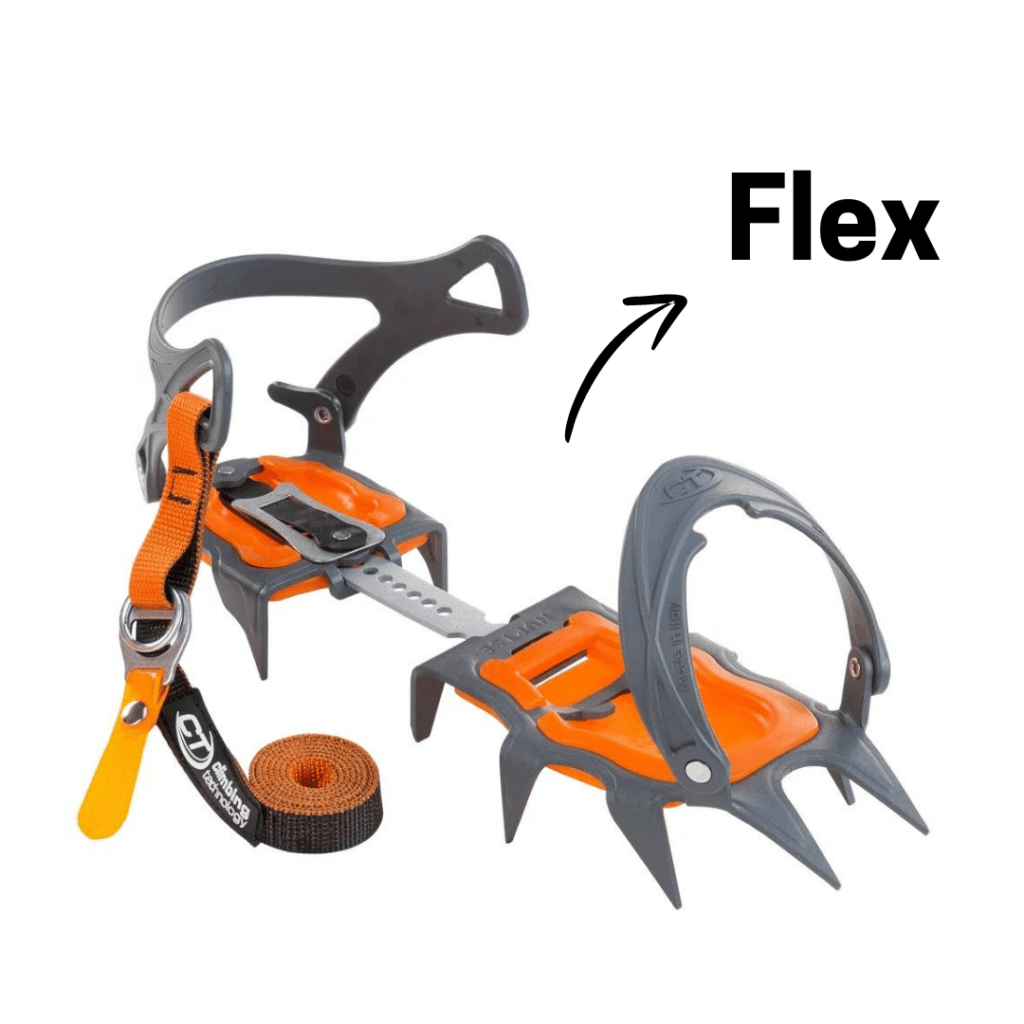
A flex crampon often features an articulated frame that flexes with the movement of your boot. This means it can be used with less rigid mountaineering boots and is more comfortable for walking, making them an excellent choice for general mountaineering. Flex crampons provide less precision in steep or technical mountaineering or ice climbing, and may wear out faster in demanding conditions.
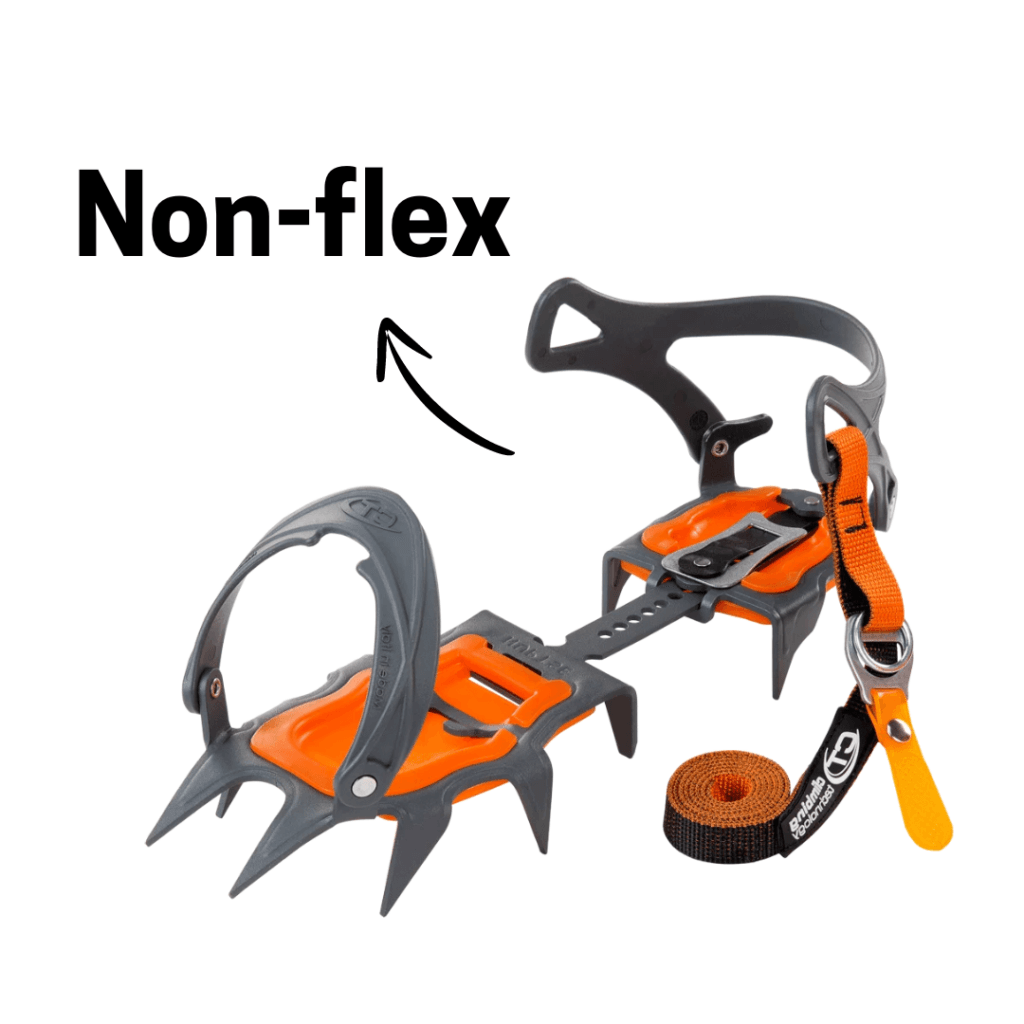
Non-flex crampons, sometimes referred to as rigid or semi-rigid crampons, have a stiffer, more solid frame with minimal to no articulation. This design prioritises stability making them ideal for more technical mountaineering and ice-climbing. However, tey are only compatible with completely stiff mountaineering boots and may be less comfortable for long approaches.
Classic, Semi-Automatic and Automatic Crampon Variations
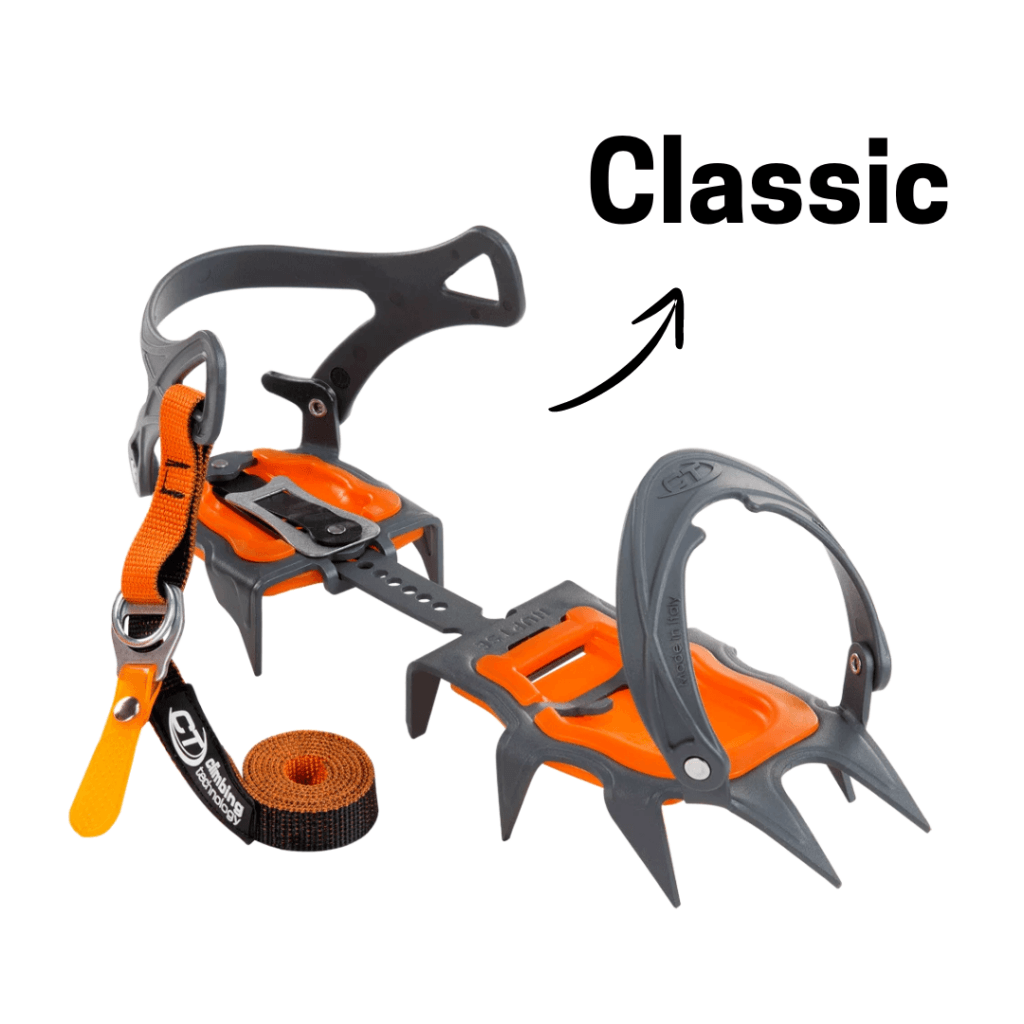
Classic crampons, also known as strap-on crampons, are designed to be secured to the boot using adjustable straps. They typically feature a universal design that can be adapted to fit a wide range of boot types, including those without a specific crampon-compatible welt. They are easy to take on and off, however may not provide a high level of precision and performance on technical or steep routes, and may need to be tightened during wear.
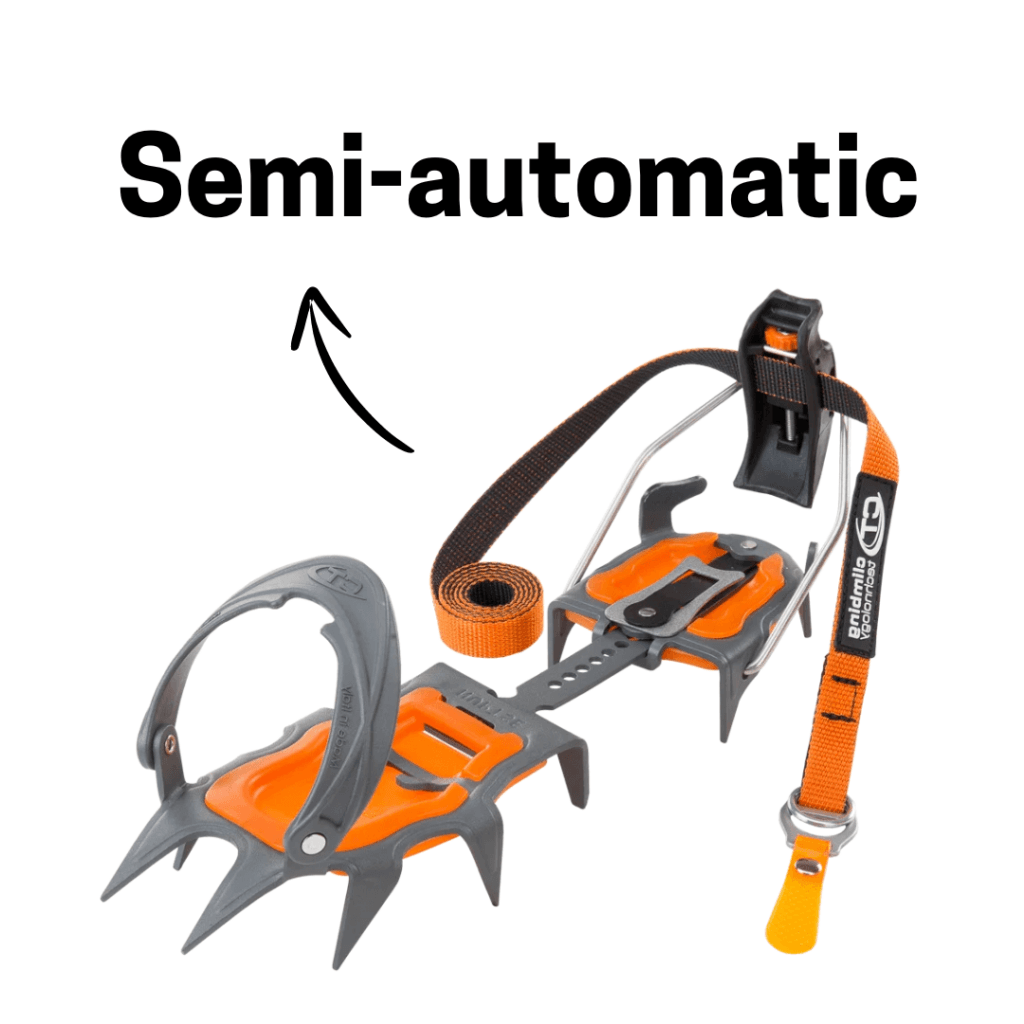
Semi-automatic crampons, also known as hybrid crampons, are designed to offer a compromise between classic and automatic models, clipping on at the heel and strapping on to the toe. This makes them easier to take on and off and more stable than the classic crampon, making them a popular all round crampon for many mountaineers. However, they do require a stiffer shank than the classic, and a crampon compatible heel welt.
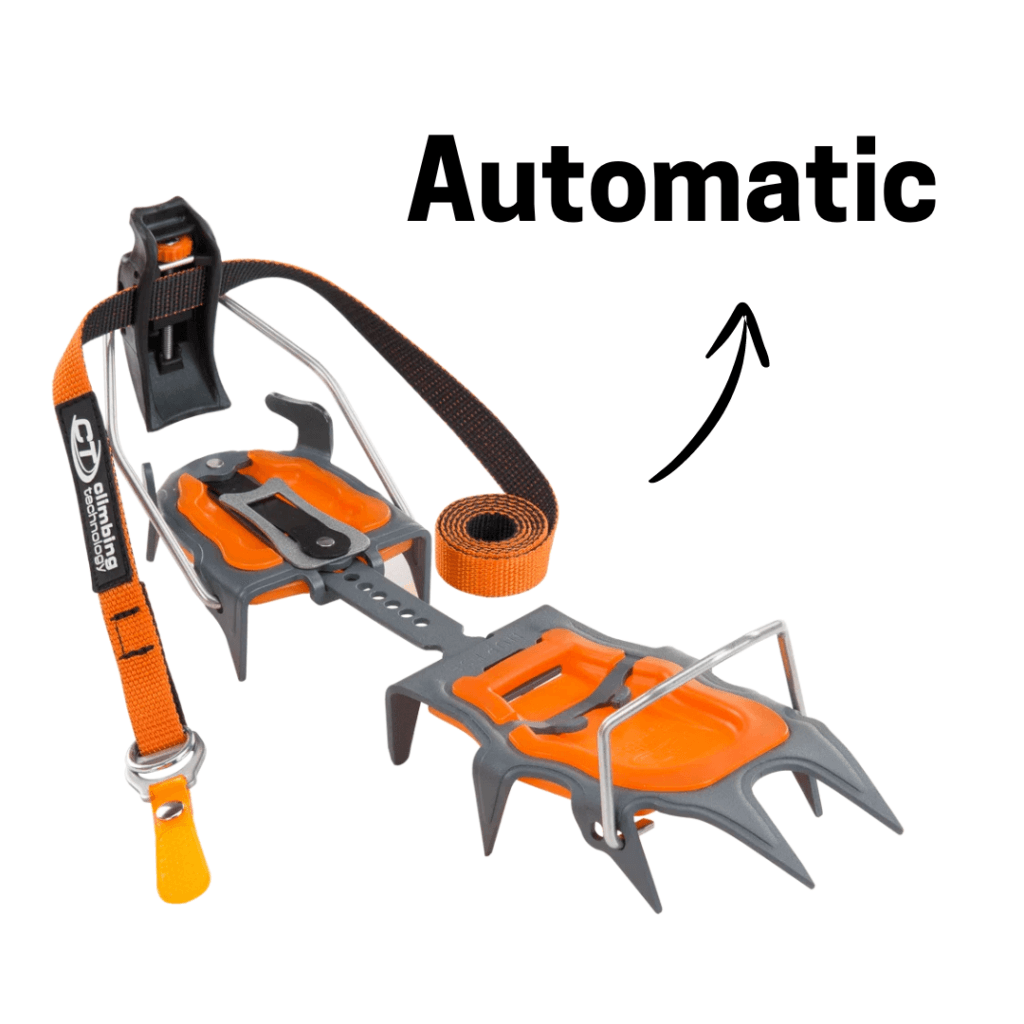
Automatic crampons, also known as step-in crampons, attach securely to the boot with a locking mechanism. They are designed to be used with boots that have the most rigid soles and a specific crampon-compatible heel welt and toe bail. This provides a very secure fit which improves performance on technical and steep routes and is highly durable.


10 points
Best for: Icy footpaths and tramping with limited snow and ice – not made for mountaineering
Pros: Fits on any shoe, super light and portable

Mini Crampon 4 Point and Mini Crampon 6 Point
4 or 6 points
Best for: Tramping in rougher terrine with snow and ice
Pros: Fits on any shoe, light and small

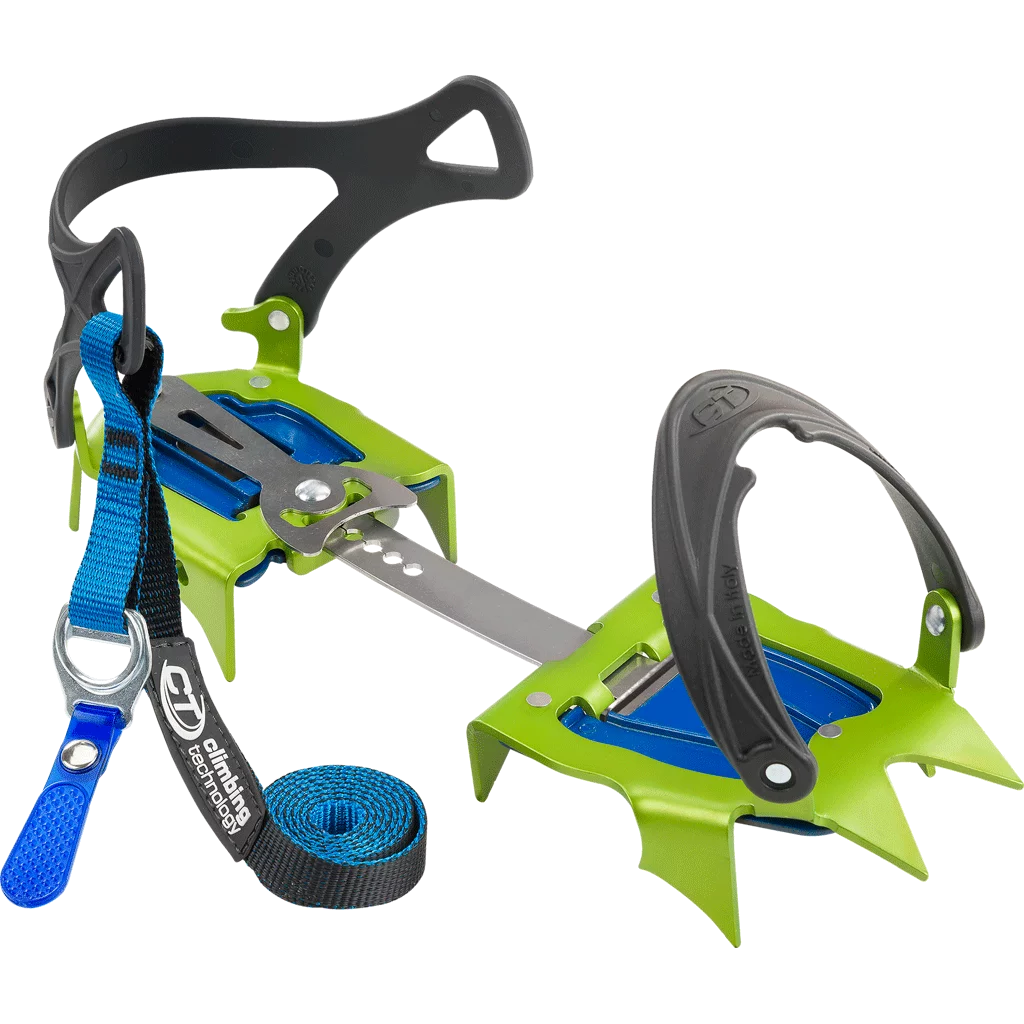
10 points
Best for: Ski touring and progression on snow but not rock
Pros: The wide point design provides great holding power over all types of snow, light
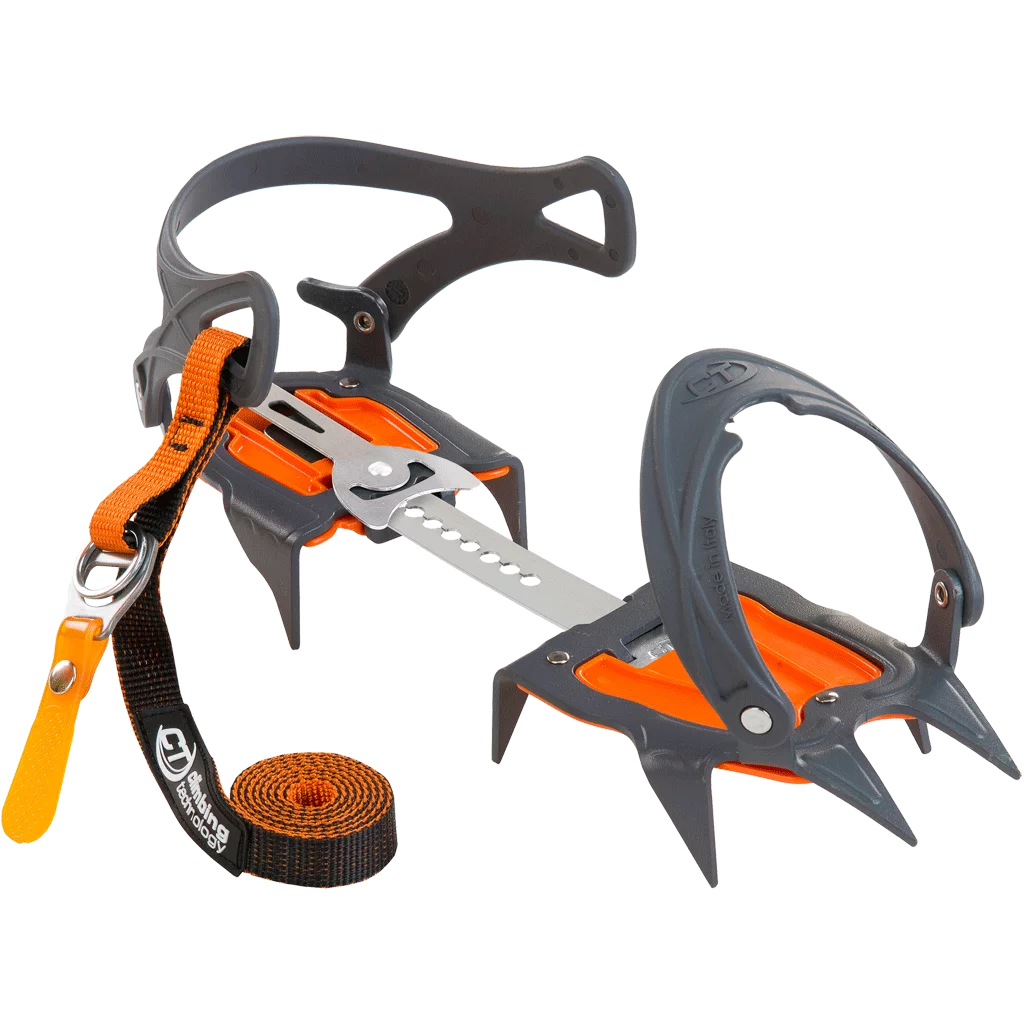
10 points
Best for: Walking in low to mid mountain snow
Pros: Adjustment bar makes them compact when not in use
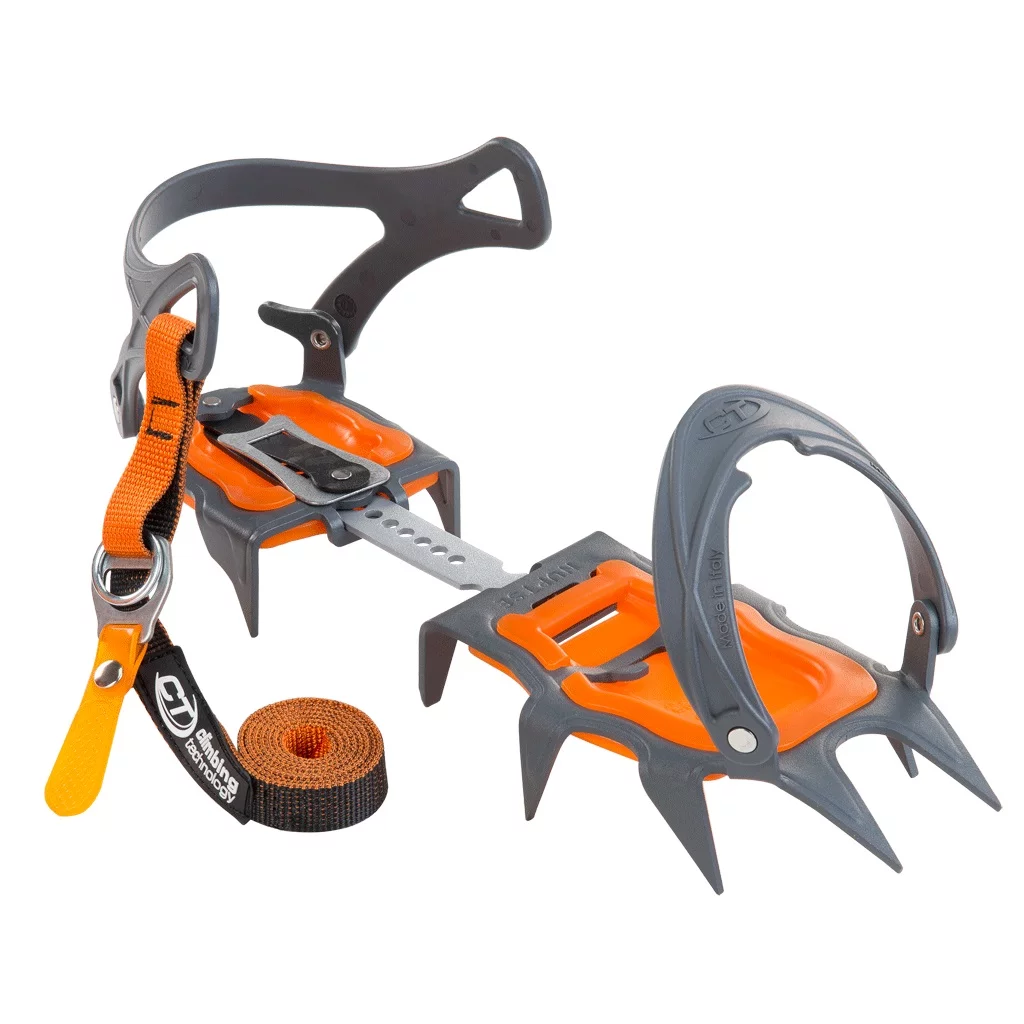
Nuptse Evo and Nuptse Evo Flex
12 points
Best for: Classic mountaineering and easy mixed routes
Pros: Has a protective bottom cover making them versatile for use on rock and ice


12 points
Best for: Technical mountaineering and ice climbing
Pros: More affordable but sound ice climbing crampon
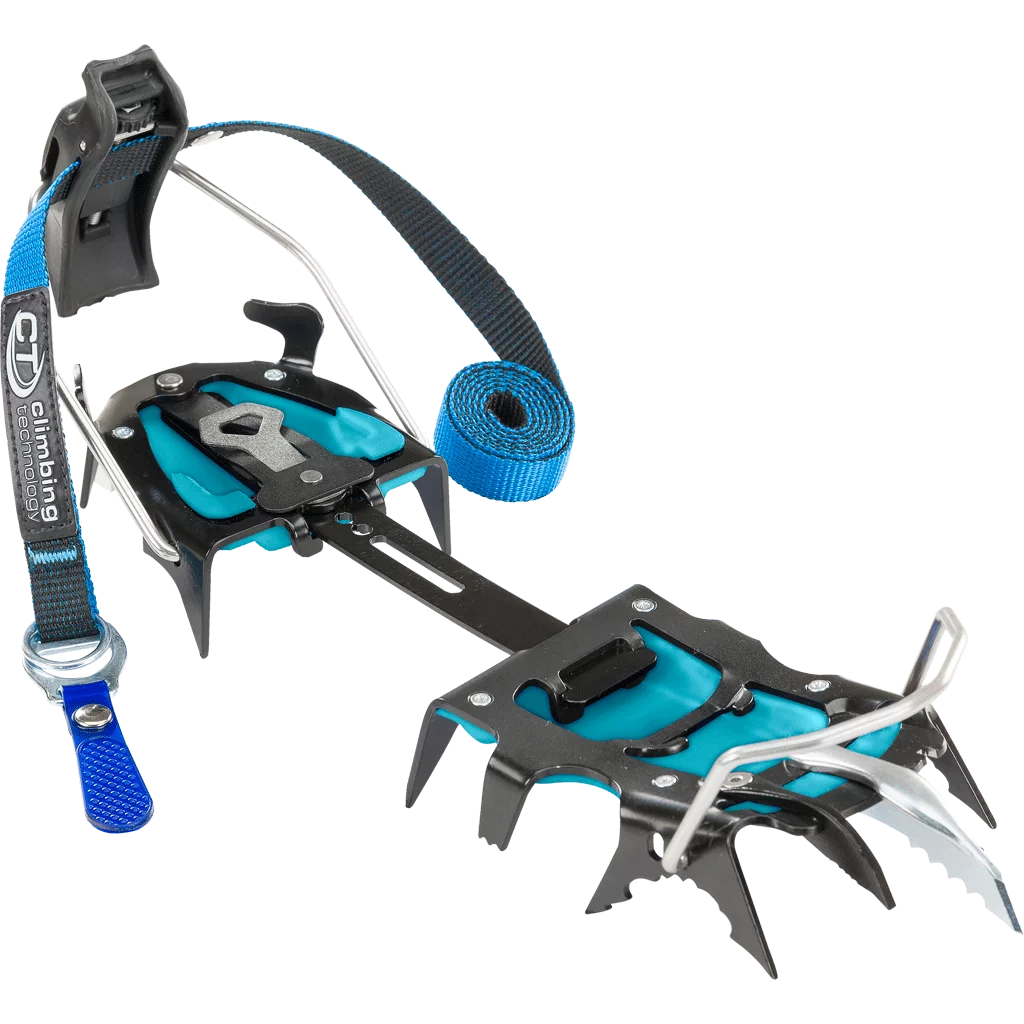
13 points
Best for: Designed for the steepest and hardness ice climbing routes
Pros: Interchangeable mono and dual points for versatility
Have more questions? Come into the store or contact us.